When we talk about people’s taste preferences, we often attribute these preferences to an individual’s choice on whether they decide to eat or not eat certain foods. However, the level of spiciness we are able to handle depends on a mix of our predisposed genes and the culture we grew up in. A personal case in point is when my whole family goes out to eat and have to account for my grandpa and grandma being supertasters ( a term I will explain later in the blog). Recently, we went out to a restaurant featuring New Orleans style cuisine, known for its unique seasonings and hot peppers. When the appetizer of fried alligator came out, we all thought that the meat was mildly spicy, as it was seasoned with cajun spices and black pepper. My grandmother, on the other hand, thought the fried alligator was extremely spicy. While she had only a single bite, she kept gulping down water, telling the rest of us that her throat was on fire.
While the rest of us at the time thought she was exaggerating, I think that it is more than likely that my grandmother is a supertaster. Dr. Linda Bartoshuk, a professor at Yale School of Medicine, studies the interplay between taste buds and chiles. In a study looking at taste and oral pain, she found that the taste system can inhibit activities which are incompatible with eating. When taste is damaged, the inhibition system is not longer in place and pain phantoms are felt by supertasters. In addition to being sensitive to spicy foods, supertasters often cannot stand bitter foods such as spinach, broccoli, and brussel sprouts.
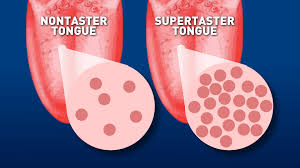
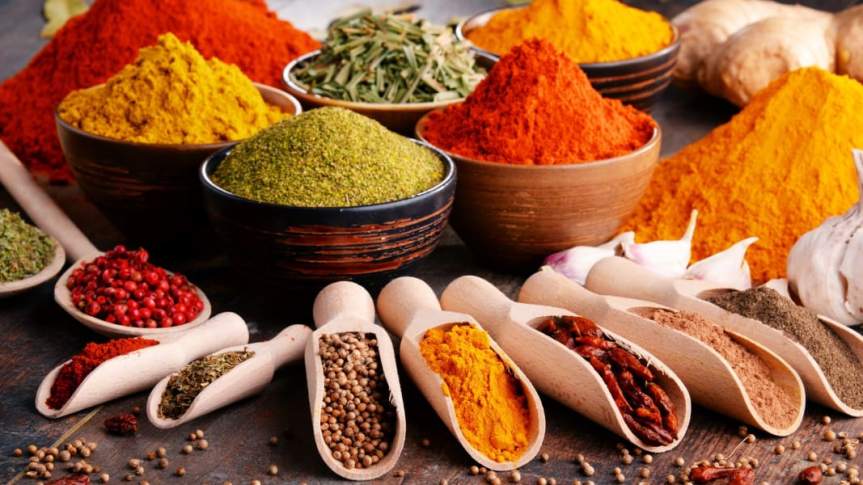
Why is it that some of us are supertasters while others are nontasters? The answer lies in cultural, genetic, and culinary factors. For those who live in environments abundant in chile peppers, the addition of chiles to food reduces the number of microbes present in the food. Studies have also found that chiles and other spices put in meat fight bacteria and fungi that make meat spoil. It is fascinating to see that the intensity of the use of chiles and other spices in hotter climates is higher than in cooler climates. Deciding to prove the science behind that hypothesis, researchers Sherman and Billing found that the amount of spices placed in dishes in tropical environments is enough to kill microorganisms that will get meat eaters sick. Basically, the more likely your food will spoil quickly, the more spices you are going to put in your food to prevent the spoiling!

However, the story of spices and microbes doesn’t end there. As humans and microbes continue the arms race against each other for survival, scientists surmise that evolutionary processes are changing the genes of bacteria and fungi, which raises questions of what can be done to microbial resistance to the chemical properties of spices. Also, as the distributions of certain bacteria, fungi, and spices continue to change, how will the frequency of tasters and non-tasters change? Well, I guess we’ll just have to see in the future.

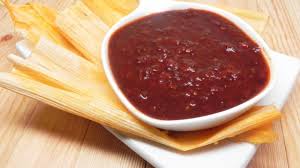
In line with my other posts, I have decided to include the recipe for a dish that is related to my post topic: Mexican Chile sauce. If you’re feeling adventurous and craving a spicy sauce, please give the recipe below a try!
Mexican Chile Recipe
Ingredients: 2 lbs red or green chiles (roasted and skin removed), 2 to 3 garlic cloves, 1/2 teaspoon cumin, 1 teaspoon salt, juice of 1/4 lime, 2 teaspoon oil, 1 to 2 jalapenos seeded (for additional spiciness), 2 cups drinking water
- After chiles are roasted and peeled, cut the stem area off, and make a cut down the side of the chile. Open it up, and scrape the seeds out with a spoon.
- Blend chiles in food processor until chunky.
- Add in remaining ingredients and process until smooth.
- Use the finished sauce immediately, refrigerate it for 2 to 3 days, or freeze it for up to 6 months as desired.
References:
Nabhan, Gary Paul. Why Some Like It Hot Food, Genes, and Cultural Diversity. Island Press, 2012. https://www.thespruceeats.com/basic-chile-sauce-2342701 https://academic.oup.com/bioscience/article/49/6/453/229475
 Food & Bodies