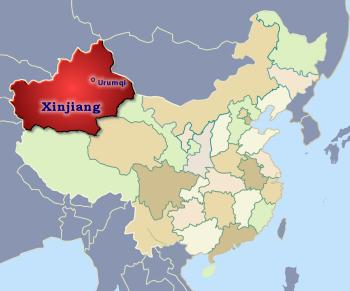
The most ancient known pieces of cheese have been found in a Bronze Age cemetery in … Xinjiang, China. That’s right! Not France or Spain or Switzerland or any European country that is famous for their cheeses. For context, Xinjiang is the northwestern region of China that is largely made up of arid deserts and mountainous areas.
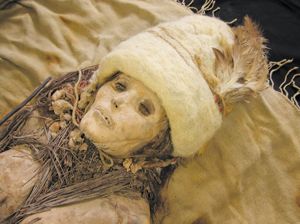
While her identity remains much of a mystery, it is evident that the mummy above loved cheese since 3,800 year old chunks of cheese were found around her the neck and chest (like the one above). Mummies, like the one above, were found buried in large, wooden coffins and have been surprisingly well-preserved because of the arid climate of the sand dune they were buried in.

At this point, you may be wondering why a population that is 90% lactose intolerant would choose to make and consume milk substances like cheese and yogurt. The key to the digestibility of this ancient cheese is that it does not include rennet, which is what is used to make hard cheeses like cheddar. Instead, the yeasts, Lactobacillus and Saccharomycetaceae, are used to make kefir yogurt and cheese products which are eaten in the Xinjiang region to this day. Kefir cheese might hold the key to how dairy consumption became widespread in the Eurasian and Middle Eastern areas, even though the majority of people are known to be intolerant to lactose. For this post, I want to take a closer look at the Xinjiang diet, particularly the importance of mutton and dairy in this diet.
Looking at Xinjiang food, I will be focusing on Uyghur dietary habits, since Uyghur minority makes up around half of the population of Xinjiang. Though Xinjiang is considered a part of China, the language and culture of Xinjiang people have more in common with Central Asia and Turkey than with the rest of China. For thousands of years, the cheesemaking process in Xinjiang has remained largely the same. While most cheese is made out of rennet, found in in animal’s stomachs, kefir cheese relies on the milk’s own acid to curdle and make cheese. Combined with sugar, this type of cheese tastes more like sweetened yogurt than cheddar or colby cheeses. To the nomadic people of Xinjiang, cheese is a daily staple and is eaten many different forms. Xinjiang cheeses can be found in both sweet and sour forms, with sour cheeses being used to make local breads and noodles.

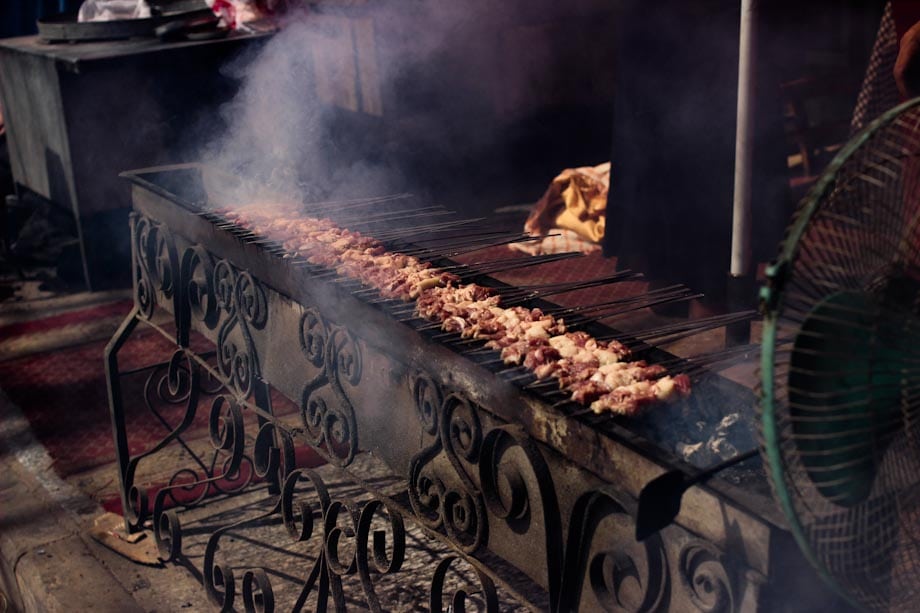
Besides cheese, mutton is most commonly eaten in Xinjiang regions. Since Xinjiang populations are largely Muslim, most meat prepared and eaten is either mutton or lamb in this region of China. Much of Northwest China contains rangelands which nomadic pastoralists have used to herd cattle for thousands of years. As you may guess, the diet of Xinjiang people largely reflects the nomadic lifestyle that people have followed here for thousands of years. Xinjiang diets, which heavily rely on dairy, red meat, breads, and noodles, reflect a high energy diet which has benefited a largely nomadic population which is constantly on the move.
While there have been obvious advantages to eating a high-caloric diet of dairy and red-meat for a nomadic, pastoralist population, trade-offs to following this diet can be seen. Especially for a population that is so dependent on their environment for nutrition, Xinjiang nomads impacted by diseases that affect their cattle like the non-contagious Blue-tongue virus(BTV) infections. With diseases like BTV which kill off a large number of cattle, Xinjiang people not only suffer a huge economic loss, but also loss of an important food source.
I hope you enjoyed this post and learned something new about a diet that is not what one typically thinks of when asked about Chinese food. I have included a recipe on Xinjiang lamb rice, if you want to recreate the flavors of Northwestern China in your kitchen at home!
Xinjiang Lamb Rice
Ingredients: 2 cups uncooked jasmine or long grain white rice, 2 pounds fatty lamb, 4 cups water, 3 slices ginger, 3 tablespoons oil, 1 medium onion diced, 1 teaspoons salt, 2 teaspoon soy sauce, 1 teaspoon cumin powder, 1 pound carrots, 1/4 cup raisins optional
- Soak the rice for 30 minutes. Drain and set aside.
- While the rice is soaking, blanch the lamb by boiling 4 cups of water in a pot along with the lamb and ginger. Let it boil for a couple of minutes, and then turn off the heat. Pick out the lamb pieces and set them aside, making sure to drain off any excess water. Then use a strainer to strain the cooking liquid. Keep that liquid to cook the rice.
- Now heat the oil in a wok over high heat. Add ONLY the fatty lamb pieces, and stir-fry to get a nice crust on them. Turn the heat down to medium low, and render the fat until the pieces start to turn golden brown, about 6 to 8 minutes.
- Turn the heat to medium, and add the onion. Cook until the onion is translucent. Now turn the heat back up to high and add the blanched lamb in a single layer so as to brown the meat on all sides. This will take a few minutes. Add 2 1/2 cups of the cooking liquid you reserved earlier, along with the salt, soy sauce, and cumin, and mix everything well. Cover and simmer for 20 minutes.
- Now add in the carrots and raisins (if using), and cover for another minute to bring the mixture back up to a boil. Turn off the heat. (Don’t worry, the carrots will finish cooking in the rice cooker. Also, at this point, the taste will be on the salty side, but remember that it will mellow up once mixed in with the rice.)
- Pour everything into the rice cooker (or a pot), and add the rice. The rice should be spread out evenly. There should be enough liquid to see peeking through the rice grains (you may need to add more water if needed), but the liquid level should not be above the rice. Cover and start the rice cooker. If you are using a pot, turn the heat up to medium high to bring the mixture to a simmer, cover, turn the heat down to low, and cook for 15-20 minutes.
- Once the rice is done cooking, open the lid, mix everything together, add salt to taste.
Links to reference cites: https://www.ncbi.nlm.nih.gov/pmc/articles/PMC6388665/ , https://www.saporedicina.com/english/food-from-xinjiang/ , https://www.atlasobscura.com/articles/cheese-buried-with-mummies, https://www.nature.com/articles/507010a https://thewoksoflife.com/lamb-rice/
 Food & Bodies